-->
Showing posts with label resources. Show all posts

Monday, September 30, 2019

MOTHERSHIP: Space Cities & Visual Tropes

MOTHERSHIP is a lot of fun. The rules are light and intuitive, and the system definitely does what the designer wants it to do while being malleable enough that you can easily make it your own. I've been playing it very happily, running the Pound of Flesh module.


It's in Space. 

When you run a game of say, Olde Tyme D&D there's this sort of mental reserve we all have (assuming I have an audience that's all absorbed plenty of European/North American sorts of media, anyway) . It's a saf assumption that everyone at the table probably  has well established aesthetic reference points and known visual tropes for "the vaguely medieval world", so you don't ever need to describe what a Town With A Castle looks like, basically.

Space isn't exactly like that, as a genre. Think of the immaculate jumpsuit world of Star Trek, then the steamy Giger'd corridors of Alien. The Winnebago-punk styling of A New Hope, contrasted with the grim meathook tomorrows of Event Horizon and Dead Space. The interior design of Blade Runner compared with the look of 2001: A Space Odyssey.


When there's non-detail-descriptive language ("you're in a spaceship") and assumed familiarity ("you're in a city"), people jump to an aesthetic reference point to fill in the gap. If I tell you "you're in a city" you know there's buildings and cars and business in it, I really don't have to tell you that. In Space, when you lean on that, what do people imagine? With 3 players and 1 Warden you could have 4 entirely different looks going on.

I'm not building up to say this is bad or anything either, it's sort of the only reason literary fiction works. Imagine having to give a complete phenomenological account of everything in a world when you wrote a book, every time. You can build off of and play with assumptions, and you can set them up.


So, Mothership: A Pound of Flesh. There's a Space City, a city inside a space station. What does it look like inside? That's not spelled out for you. 8 million people live there, you're given that much, and you pay a daily Oxygen Tax. 

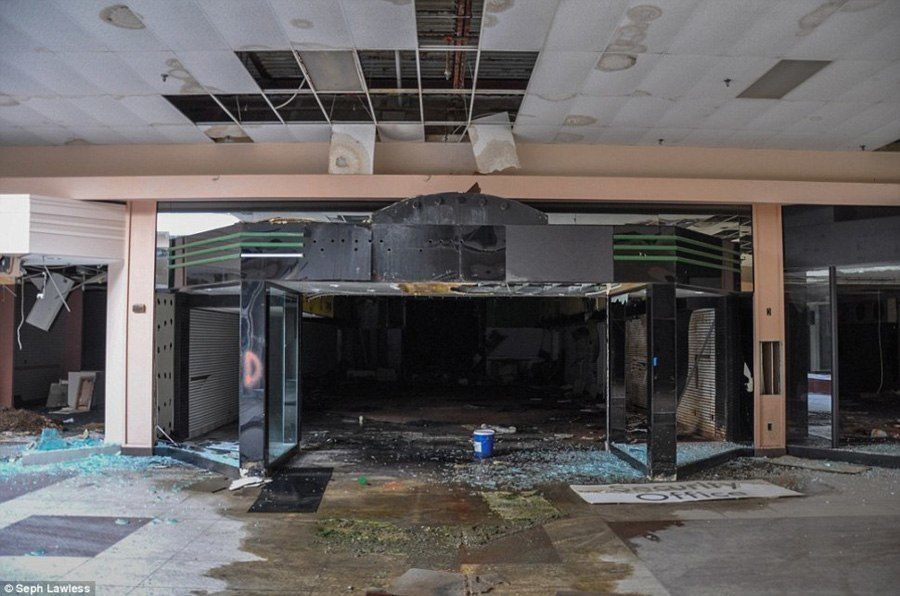
I imagined a place that always smelled like an airplane, with an occasional hint of sweat and garbage, the whole of it like a super-massive shopping mall. That's why you have to spend 10 credits a day, you just don't have O2 like that in a place this dense without paying for quality you can smell. I can use pictures of dead malls to set the scene.
Here's a few other ones.

6 SPACE CITIES


1. GARDEN

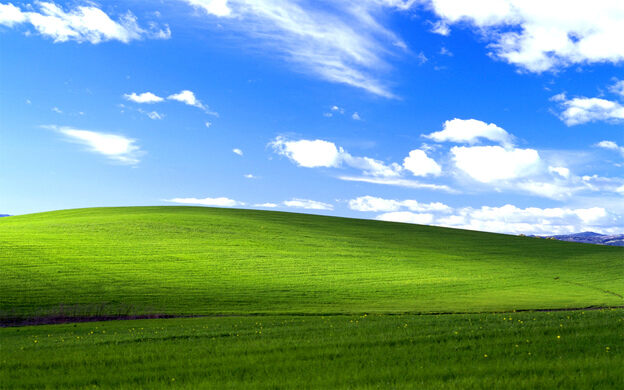
Oxygen is provided by an abundant living, thriving ecosystem. Whole biomes. There is grass, there are trees, there are fields. All of it bio-engineered, home-grown. Live animals just walking around, wandering, shitting where they please.

It's not perfect. There's no "sky", of course, only screens and glass under the outer defensive layers of whatever station this is in. Humidity and light are mechanically controlled. There's a non-insignificant chance of suffering merciless allergies the whole time, a non-zero chance of a full-bore anaphylactic event. You might get attacked by chimps, even.

But, it delights the soul to be in a place like this. You lose something from being in suits, in ships and on lifeless, hostile rocks for months on end. This kind of place brings that missing thing back, at least a little.

COST: The kind of expensive where you do not ask. This is more expensive than money. It is a gift for you be here, or more precisely, it has been a loan.

BENEFITS: Significant Stress relief, outside of worrying what you owe this place.

RISKS: As mentioned, this is a petri dish and a nature preserve. You might be allergic, it might be allergic to you, and the fauna may predatory. This includes the owners.

Related image


Related imageRelated imageImage result for giant greenhouseImage result for windows hill background


2. MODULAR
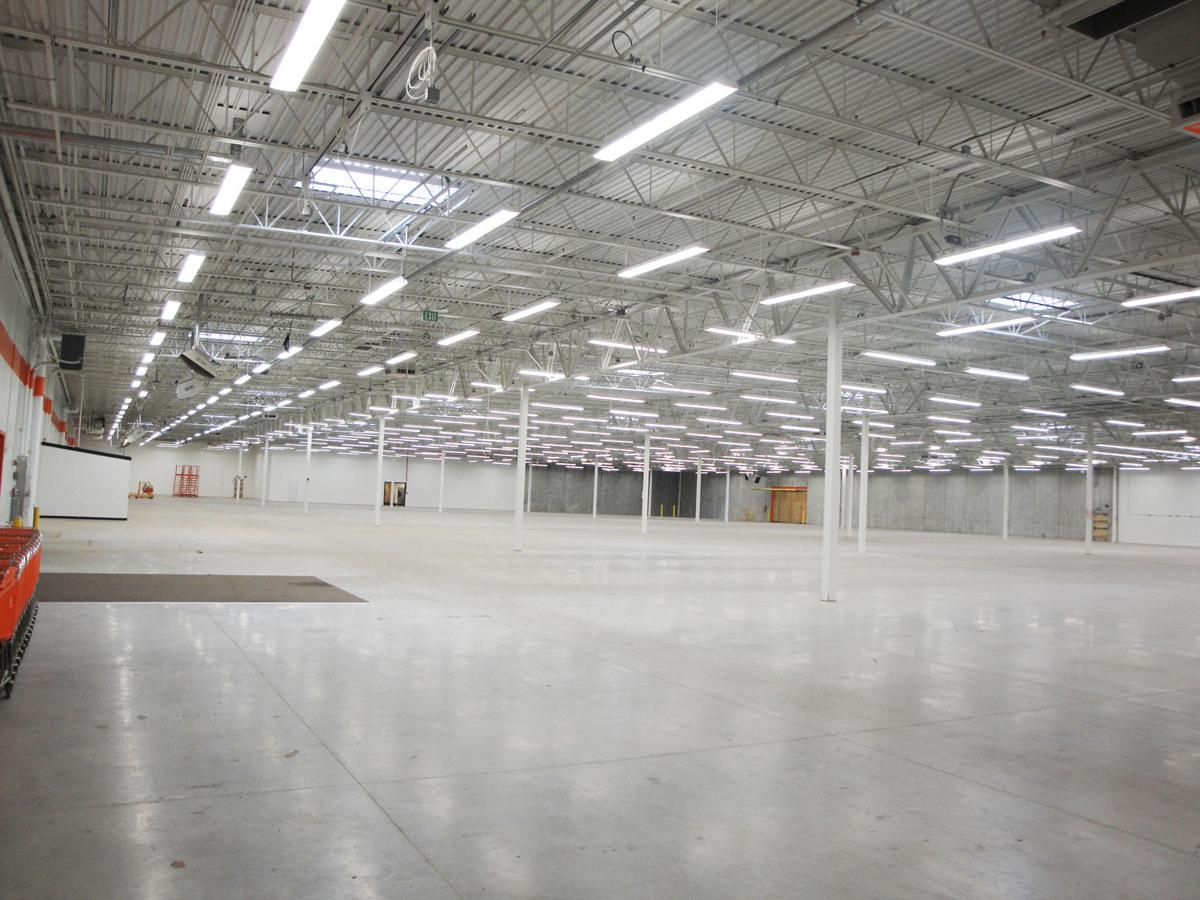
Immense warehouse-like sectors subdivided into quadrants, segments, units using movable partitions, scaffolding, and shipping container-sized units. Visualize an immense big box store space filled with sheds, additional floors created to hold more sheds. Communal bathroom and kitchen areas with large water/sewage tanks. Large bands on floor designated for traffic. Smaller warehouses built inside of larger warehouses. A world of IKEA showrooms, luxurious spa gymnasiums, and Kowloon Walled City. Each main "warehouse" has individual 02 production facilities and zoning, leading to stark difference between each sector. One can hold thousands, dozens and hundreds joined create a city-world. Imagine if the rich part of town really could close its' doors to the poor, and had its' own atmosphere.

COST: Varies wildly from Section to Section.

BENEFITS: Options. Endless, ceaseless options. Change is easy, constant, relentless. Essential independence of each discrete sector means citywide Doomsday scenarios are unlikely.

RISKS: Options. Endless, ceaseless options. Change is easy, constant, relentless. Essential independence of each discrete sector means sectorwide Doomsday scenarios are frequent.
Related imageImage result for empty home depot
Kowloon Walled CityImage result for ikea showroom houses


3. REPLICA
The artificial sky is high enough for skyscrapers. The artificial sky can remain a stately black, use inbuilt lighting systems to simulate a day/night cycle, or be some kind of endless Fremont Street Experience hellscape. Constant buzz of delivery drones overhead, buzz of electric vehicles on roads like on some kind of actual earth. An urban environment close enough to a "real one" that you can easily forget what you're inside of. Cities like this are built on grids, every inch of  real estate is leased and sold in horizontal and vertical units. Typically the whole affair is a kind of Company World, everything built on borrowed ground.

COST: Expensive. This may be the least efficient way to oxygenate a city.

BENEFITS: This is also one of the more popular forms of Exocity, or at least more enjoyed, because it hits the sweet spot between cold efficiency and actually existing psychology. It's an urban environment. It acts like something you've seen before, and can be understood like it. Making a fake atmosphere to scale and just growing a city in it works.

RISKS: The rent is high and life is cheap. Everything you didn't like about planetary cities, but with a chance to fall into O2 debt on top of it. No corrupt, ineffectual government to keep corporate entities in check either.
Image result for cyberpunk cityImage result for cyberpunk cityRelated image

4. DEAD
When a population is 95%+ Android there is no "02 Infrastructure". Vast mining outposts, research facilities, zero-g fabrication complexes, and other places where humans are in a supervisory role. Any residue of organic humanity in a place like this is either in a vacuum suit, an oxygenated ward that might be the size of an apartment building, or on a ship with a working life support system that's about to leave. Interiors are functional, ugly, and uncomfortable. At best, it's like living on an oil derrick, McMurdo Station, a submarine, or a space station now, and wearing a sealed suit almost the whole time. Amenities are minimal. Recreation is nil.

COST: Incredibly cheap, at least in terms of money. You might even be working there.

BENEFITS: If you can trust the Androids you have almost nothing to worry about, and it's just like a small town when you're one of the only few thousand real-humans.

RISKS: You can't reduce Stress, unease is constant. The environment is so close to being inhospitable to human life it takes almost nothing to make it completely inhospitable. It's just like a small town, of people who've been around too many Androids for too long. There aren't many things here, unless the Androids have secret recreational cycles.

Image result for space station interiorRelated imageRelated image

5. MICRO
Micro-apartments, capsule hotels, plazas, and loading docks. All hallways and corridors, lobby waiting areas, generic interiors re-purposed regularly. Hundreds of floors. No sky, no windows. Shopping Malls, Airports, Convention Centers, Storage Units. An absolutely thriving VR scene.

Image result for dead mall interiorImage result for dead mall interiorImage result for dead mall interiorImage result for rental storage

COST: Affordable! The very modest alternative to the Replica concept.

BENEFITS: You can probably find it here, for sale, for rent, to own. Affordable!

RISKS: Easy to get lost in. One wrong turn and you end up in some dim chamber, abandoned, leaky with low 02, no security systems. No way out, you are surrounded, wake up later in a dark room. It gets worse from there. They never find you, remains thrown down disposal chute. 

It's cheap because it's easy to build, it's easier to replace it than fix it , it's easier to forget about a lost sections, even if someone plugs the wholes and opens a grey market organ farm.

6. IMMERSIVE
The very non-optional VR overlay creates a unique civic experience. Informational videos on plain wall-panels, or a complete Synaesthetic Immersion Experience. It varies. If you let yourself get lost in the more ambitious ones for a bit this is the best there is, was, or could be. It's at least memorable, like a dream. If you aren't comfortable with haptic fedback, having your eyes influenced a bit, your ears whispered into, getting your nerves tickled, don't bother going past the Welcome Center.

COST: Not as much as you'd think, not as cheap as you'd like.

BENEFITS: Particularly efficient Stress relief, numerous Optional Cosmetic Upgrades.

RISKS: If you're worried about them keeping you in some vat while you just think you're walking around, them duping your synapses and carving off parts of you for resale while they drain your accounts, there are probably ways to take precaution. You wouldn't want to see how fast a place with full Immersion could descend into savagery if the Main Processor went down. Being sold things that aren't real.

Image result for augmented realityImage result for augmented realityImage result for pastelaeRelated imageImage result for augmented realityRelated image


Friday, May 27, 2016

A Confusion of Tongues

One of my favorite parts of Playtest Document 0.1 so far is the removal of a universal "magical language" from the game, and  "Read Magic" along with it. Instead, every Magic-User writes their spells in a rare, obscure, or dead language of their choice.

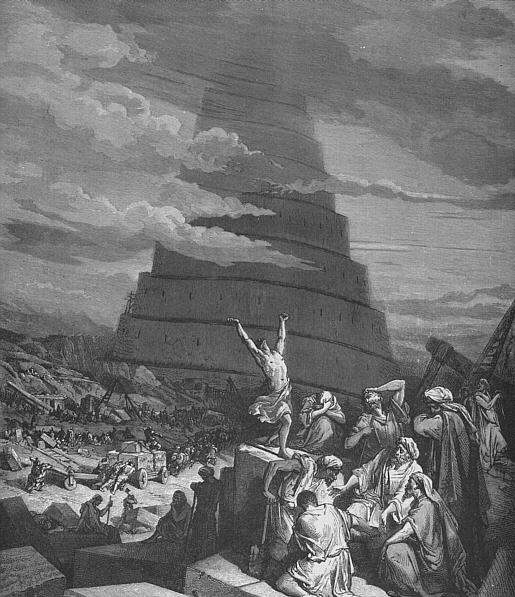
What I really like about this sort of system is that it's a fountain of adventure hooks for Adventurers to go on ridiculous scholar hunts throughout the world. It's one thing to kill the wizard, but it's a whole other issue finding someone who'll teach you enough Aramaic so you can use his old spell book.

There are, however, a lot of dead, rare, and obscure languages. I gathered some of my favorites into a few different categories after trawling through the sources, culling them down while trying to maintain some variety and connectedness, and also making them into lists that'll fit onto your standard Polyhedral dice. I have some more thoughts about making these into tables as well, but we’ll get to that later.

While basically all of this is from the real world in some way or another this isn’t a work of professional scholarship; I’ve altered, fabricated, or fully abandoned facts here and there. I've also embellished some things and made up a few others. I did try to avoid anachronisms as best I could so everything would fit in an Early Modern setting, except for Voynich because that was too good to leave out.

d10 Languages of Mystical & Religious Origin
1. Enochian: The celestial language of the Angels. It is also known as the "Adamical" lanugage, as it is thought to be the language used by the Adam in Eden when naming all the living things of Earth, and also the language of the creator God during the construction of the universe itself. It sounds vaguely like Hebrew, is read from right to left, and uses a unique alphabet.
2. Voynich: A language written without punctuation, comprised of at least 23 characters drawn using only one or two strokes of a pen, with words that sometimes have tripled letters. It sounds like something between a Germanic language and Chinese, Tibetan, or Vietnamese when spoken. It is remarkably difficult to decipher or translate, and is possibly unearthly in origin.
3. Sandha-bhasa (also called Gongpay-kay): the "twilight language" of tantric Buddhists and certain Hindus. Its full and correct use involves very precise visual, verbal, and nonverbal communication. It is said to be such a remarkably esoteric language that only the initiated have any hope of understanding it, and even then only through the guidance of a proper teacher.
4. The Language of the Birds: Also called “Lingua Verte” or “The Green Language” by Alchemists. This language can be whistled, and so may be written using only musical notation. It is also said that it can only be used to transmit true information, and it may or may not allow one to communicate with all of nature itself including, in addition to birds.
5. Balaibalan: A language created by Sufi mystics using the Arabic alphabet, with a new vocabulary entirely constructed for it. Some of these words may be deciphered back to common Arabic words through an understanding of Sufi metaphor. There are those who claim this language is the one in which the next revelation of god will be written in, as Hebrew, Aramaic, and Arabic once were used.
6. Vāc: Vedic Sanskrit, from the Indian subcontinent. The language of the sacred Vedas, and thought to be the language of the Gods themselves. Found most frequently in the form of chants, the pitch used when speaking certain words can change their meaning significantly. There exist a great variety of scripts for the written form of this language.
7. Ecclesiastical or “Church" Latin: The Latin language as it is used by the Catholic church for performance of the Roman Rite, and the language of the Holy See. The grammar and pronunciation vary from Classical Latin, as well as the meaning of certain words.
8. Classical Arabic: the language of the Koran, which is distinct from the language as it is spoken throughout the world. It is related to both Hebrew and Aramaic, and written in a unique and distinctive script.
9. Hebrew: the liturgical language of the Jewish faith, and of the Israelites and their ancestors. Related to the ancient language called Aramaic, as well as Arabic.
10. Avestan: the sacred language of Zoroastrianism, written using a 53 character alphabet from right to left. This alphabet is very loosely based on the Aramaic one.
d10 Obscure Languages Of Human Design
1. Lingua Ignota: the "unknown language". Written using the "litterae ignotae, an alphabet of 23 letters. It is a language of constructed words ordered but ordered using the Latin grammar, making it both straightforward and remarkably difficult to translate. Glossaries translating it into Latin are known to exist, and if found would make translating this language remarkably simple, assuming one is familiar with Latin grammar.
2. Lingua Universalis: The invention of a German philosopher*, typically used only for mathematical calculations among the well-educated elite. *Leibniz, in 1678.
3. Grammelot: a nonsense language of mime and mimicry composed of onomatopoeia, borrowed words, and movement. It would typically be encountered in a Commedia dell'arte performance, but despite its comedic nature it has nonetheless been used to record occult knowledge using jokes and buffoonery.
4. La Cifra del Sig. Giovan Battista Belaso: the dreaded code language of Giovan Battista known as le chiffre indéchiffrable  to the French ("the indecipherable cipher"). It is essentially unbreakable without knowledge of the key phrase used to decode it, as well as fluency in the language it was originally written in as well.
5. Real Character, or, "a Philosophical Language": Created by an English clergyman and natural philosopher*, this language is claimed to be able to describe every possible thing or notion in our universe. It is only a written language, with no agreement or guidance as to how it would or should be spoken. *John Wilkins, in 1668
6. Logopandecteision: A Scottish philosophers* remarkable invention, said to have been suppressed by the Church. It has only four numbers, uses eleven genders (which include god, goddess, man, woman, and animal), and is conjugated with eleven tenses, seven moods, and four distinct voices. It is allegedly capable of translating any idiom without altering its meaning, and expressing even the most vast sums using only two characters. *Sir Thomas Urquhart, in 1653

7. Asemic Writing: A trance language, when spoken it is known as glossolalia. A combination of legible and illegible scribbles, often fully improvised. Possibly translatable through the use of a cipher or context, but not necessarily.
8. Hermetic Language: An entirely novel but consistent writing system, vocabulary, and grammar created by the Magic-User for use in their spell book alone. Such a language likely to be readable by no other being on earth without intense and dedicated scholarship.
9. Macaronic Language: A mixture of languages within the same text, sometimes involving hybrid words. The Hypnerotomachia Poliphili, or "Poliphilo's Strife of Love in a Dream", is the most well known macaronic text, it is written in a sort of Italian with terms based on Latin and Greek, as well as some Hebrew, Arabic, and common Italian words.
10. Hermeneutic style: a variation on the Latin language that was most popular in the 10th century, it is only distinct from other forms of Latin due to its pervasive use of archaic and elaborate terminology derived from Greek.

d10 Languages Of The Bible & Of Some Ancient Empires
1. Sumerian: There are two dialects of Sumerian, one of which is sometimes used only by women, or in occult song. Longer words are created by combining many smaller ones together, similar to German. It sounds vaguely like classical Arabic when spoken, and is written using a series of wedge shaped markings known as cuneiform.
2. Old Babylonian: Also called Old Assyrian; the language of King Hammurabi, and the one used on the Code of Ur-Nammu. Written using cuneiform and logograms. Despite being written in cuneiform it is actually unrelated to the other languages of old Mesopotamia. Pronunciation varies wildly among current speakers.
3. Neshite: also called Nesite or Hittite. The language of what is now called Turkey, during the bronze-age. It's nouns only distinguish between moving and non-moving objects, rather than gendered ones. When spoken it contains several distinctive sounds produced in no other language.
4. Aramaic: The tongue of the Christian martyr known as Jesus, and also of a great many empires of the ancient world. It is related to Hebrew and Arabic, and is still sometimes used as a liturgical language. It can be written in several different cursive forms.
5. Lycian: A language of the iron age, written using a modified Greek alphabet. There exist texts which are written in Lycian, Greek, and Aramaic, greatly simplifying translation.
6. Luwian: Written in Cuneiform or by using hieroglyphs. It is closely related to the Neshite language, and is what largely replaced it in the 14th century BC. It was spoken by the Trojans, in their horse.
7. Sogdian: the lingua fraca of the Silk Road, it is written right to left using an alphabet as well as logographs.

8. Hudum Mongol bichig: a script for Mongolian developed around 1200 AD and derived from Sogdian, it is written vertically from right to left.
9. Etrsucan: No living language is related to this one, the only connection being that Latin alphabet was eventually derived from the Etruscan one. There do however exist gold leaves on which an Etruscan text is translated into Phoenician.
10. Phoenecian: A very distant ancestor of Arabic and Hebrew, the language of Canaan.

d10 Dead Languages of Europe
1. Gothic: The language used by the barbarians responsible for the decline and fall of the Roman empire. Used in the Iberian peninsula until the late 8th century. There exist Bibles translated into this language.
2. Althochdeutsch: "old high German", the oldest form of the German language from 750 to 1050 AD.
3. Goídelc: Also called “Old Gaelic”, the notably complex ancestor language of Scottish Gaelic. In common use until 900 AD.
4. Ænglisc: Also known as Anglo-Saxon. This is English as it was spoken during the Middle Ages, and was in use for almost 700 years.
5. Castellano Antiguo: Medieval Spanish, as it was spoken until the beginning of the 15th century.
6. Zarphatic: A language used by the Jewish peoples of Northern France until the 14th century.
7. Ancien Français: French as it was spoken in the 8th through 14th centuries.
8. Old Low Franconian: the language which developed into Middle Dutch by the 12th century.
9. Medieval Galician: an ancestor language of Portuguese.
10. Medieval Latin: the highly individualistic and idiosyncratic language of medieval scholarship.