This spell creates a wonderful solvent. It requires a vessel to be cast, which is chosen by the caster. The caster must be touching the vessel as they cast the spell.
The solvent is clear and colorless and appears instantly. It has no smell and has the same viscosity as water. The summoned volume is enough to exactly fill the provided vessel to the lip (or no more than could currently fit inside the body of the caster, whichever volume is smaller*)
This solvent will dissolve any solid thing of a different material than the provided vessel the instant it contacts it, releasing a warm mist into the air as it vanishes. It has no effect on liquids or gases of any kind. Vulnerable materials are destroyed in an instant, there is no splashing or resistance.
"material" is defined broadly e.g. if summoned into a wooden bowl the solvent will dissolve anything not made of any wood (not just the exact same wood as the bowl), and if summoned into the caster's mouth it will not harm any human flesh or body parts (not just the casters).
The damage caused by the solvent is smooth like polished stone, marbles, or the holes in cheese. Any bodies harmed are left like the missing parts were long ago amputated, or never even there.**
The solvent exists for one turn for every level of the caster, or until it contacts a vulnerable material. When the solvent contacts a vulnerable material it will destroy an amount of those materials exactly equal to the volume of solvent. The solvent vanishes as it dissolves a material.
A fine dust is left, a volume equal to what was dissolved. This dust weighs about as much as flour and is a dull mix of the colors of what was ruined. The dust has no value on its own.
The dust, if saved, can be later formed into a paste that can restore the damage done by the solvent.
To form this paste one must mix the dust with a solution. The amount of solution required is equal to the volume of acid that first created the dust. The solution is made of distilled water and a fingernail-sized portion of the same kind of material the solvent originally dissolved.
The solution is created by submerging the sample portion of the material in the water for one full day.
If the dust is mixed with any other liquid it forms an ugly mud that soon crumbles into nothing. If too much water is used a useless slurry is formed, which dries to a dull powder. If the solution is allowed to steep for too long the restored portions will be brittle (and break into fragments easily), and if steeped for too short the restored portions will be soft (and will slowly melt).
The paste is inert until applied (like cake frosting or brick mortar) to where the damage was done. The paste then bubbles and froths for one turn, enlarging like a loaf of bread. The form then shrinks and settles, the object restored to as it was before. (whole objects begin to reconstitute as soon as the paste is correctly made)
Any once living things are whole and alive, and once missing parts of creatures are reattached and fully functional without scarring. All is left as if the solvent never touched it.***
*the human stomach can hold at most about four liters, for what that's worth
**this causes no damage or pain, at least directly. it could leave something very uncomfortable, or even biologically unviable****. whole creatures consumed by it are not killed, only suspended.
***If a significant amount of the dust was lost the restoration of the paste is similarly lessened. If the incorrect paste is applied to something damaged by the solvent these once discrete things are then united as one, but a non-functional melange is created.
****if the particular damage caused by the solvent would be enough to instantly kill a living thing too large to be fully dissolved (e.g. dissolving the heart or brain), the remaining body is neither dead or alive. It is left somewhat incorruptible until restored, remaining tepid and whole unless directly attacked by another or harmed by the environment. Parts of whole things "cut off" by the solvent are also preserved this way, and must be properly reattached by hand when the paste is applied.

Showing posts with label spell. Show all posts
Showing posts with label spell. Show all posts
Friday, January 5, 2018


Sunday, August 13, 2017
Magic: Spell Descriptions for Wonder & Wickedness
Wonder & Wickedness is almost perfect. You'll need it to make sense of this as a resource, so go and buy it if you don't have it yet.
I've used bits of it in almost everything I've run since I read it, but it does have a couple of gaps in some details. One of them is how every Maleficence also does something special; each has a secondary effect added from a one-word descriptor. It has some suggestions, and you could come up with something new every time if you want, but I started using these tables a while back to save time and precious imagination during character creation, and I've used them for a while now. It makes it so you don't end up defaulting to "fire" and "ice" or whatever.
There's usually a round table discussion before any casting with Wonder & Wickedness, since the spells tend to be so potent and interesting. With these Maleficences there tends to be a nice chat about if it's really the best time to unleash the most horrible cloud of spiders (or whatever) every time.
They're great even if you aren't playing as a Magic-User. I was a Fighter in a friends' game recently, and the description of how the shadows became "unstuck" and began slicing someone to ribbons at the Magic-Users request was really memorable for all of us (the survivors came after us with farm implements, but that's another story.)
Anyway, the tables: Descriptions and sketched out effects for Magical Attacks and Defenses using the "Wonder and Wickedness" system, avoiding the common "magic missile" and "magic shield" aesthetics. They're in that sparser W&W style, but you can add more detail if your game needs it.
In general I have things last an amount of time (Round or Turn) equal to the level of the Magic-User who cast it (that's what "several rounds" means). I use the generic term "Save" because I use a 2 save system, but you might use a 5 save system, and so on. Damage done by a Maleficence or its after-effects are always an open-ended (or exploding) die.
Oh also, if a character uses some kind of thingy (wand or dagger or something) to cast their Maleficence I promise I won't take it away just to screw them over, since it's just fluff (unless it was a situation where they'd be unable to cast anyway, you get the idea).
Your Maleficence
Roll 1d12
1. is summoned up and guided by you with dramatic, sweeping gestures
2. emerges from your pointed finger
3. spews out from the tip of your staff or wand
4. emanates from a medallion or amulet
5. appears as you assume a strange pose
6. is thrown out from your opened palms
7. sprays out from your open mouth
8. bursts forth from your heart or solar plexus
9. is a geyser from your forehead
10. beams out from your eyes
11. appears from an empty space above your head
12. is projected out from a ceremonial object you carry (dagger, skull, crystal, idol, tablet, goblet).
in the form of
Roll 1d20
1. SWARMING
flying horde of assailants that besiege the target (a sudden flock of carnivorous birds or bats, a plague of tremendous locusts or other winged insects, an army of fae folk with tiny sharp things). The target is disoriented by this hostile cloud and flails around blindly for several rounds, only moving a few yards in a random direction until a Save is made.
2. BEAM
A thin shaft of pure colored light, a laser-like line so bright it looks solid (1d8: red. orange, yellow, blue, green, indigo, violet, white). The target and nearby witnesses must Save or be blinded for several rounds. Whatever is killed by this crumbles to ashes.
3. INFERNO
A long rolling tongue of unearthly fire (1d6: pink, blue, green, violet, black, white). This flame ignites something not normally so flammable after the initial scorch, which then burns, while nothing else does. (1d4. 1. things of metal, 2. skin and flesh, 3. the air like a continual fireball around the target, 4. the ground itself, in a circle around the target). These things burn for several turns.
4. SHADOW
The shadows become a sharpened whirling vortex. +1d6 Damage if the target is in chiaroscuro deep shadows, +2d6 if they are in complete darkness.
5. ABSENCE
A swirling, undulating amoebic mass of pulsating dark and emptiness that causes the target to blur and fade as it envelops them. The target dissolves into the air if they are killed. The useful mind of the target is temporarily erased if they survive, leaving them in a stupor unless they Save.
6. SCIROCCO
A screaming wind carrying particles like ground glass and sandpaper grit. The target is flung back 5' per level of the Magic-User unless a Save is made, with loose possessions thrown much farther.
7. ENERVATION
A dim crepuscular ray of light that withers what it lands on, wrinkling skin and crackling living surfaces with aridity. The target will act last on following rounds, and suffer penalties equal to the level of the Magic-User. Those killed by this desiccate into little dolls.
8. IMPALING
Long dark iron needles, or sudden spears of moonlight silver, or glowing translucent arrows fly forth and impale the target. They are pinned in place, or to the wall, unless a Save is made.Forms and shapes that shoot forth and collide, shatter, and explode.
9. PANIC
A (1d4: mirror-like, transparent, dull metallic, glittering stony) (1d4: disc, triangle, cone, cube) with a sound like (1d4: glass shattering, vibrating bells, an angry choir, hideous thunder). The target and those nearby must Save or react as if they failed Morale for several rounds.
10. GELID
A column of air freezes, void of oxygen, the temperature dipping to below that of the void around the stars for an instant. Unless a save is made, for several rounds after the target may shatter into pieces when struck unless another save is made.
11. BILE
A jet and spray of vile sizzling fluids of a syrupy consistency (1d4: yellow, brown, grey, red). These saturate the target and “soften” them unless a Save is made: whatever strikes them afterwards does twice as much damage for several rounds. If killed the target melts into an oily pool of colors and material.
12. IMP
A sudden assault by a hellish creature (1d4: A snake-thing with arms and wings, a leaping fish with limbs, a small nude pig man, a howling bipedal cat). While mangling the target it takes something from them to return to the Magic-User, before departing whence they came. This can be a mere stolen object, or a severed limb if the target is thoroughly mangled.
13. MIDAS
A cloud of sparkling and twinkling glitter, motes of magic dust. The target is shredded by tiny flakes, and what falls off from them is transformed into precious metal shavings. They crumble into gold and silver leaf as they die. The amount of damage inflicted multiplied by the level of the Magic-User in SP litters the ground around the Target, if they are killed by this.
14. VENOM
A sudden carpet of stinging insects: beetles, spiders, centipedes, and worms that en-robe the target, devouring them as they are filled with venom. For several rounds afterwards the target must Save or suffer 1d6 additional damage.
15. DISTORTION
A contained field of optical distortion warps, wraps, and folds around the target. They are are contorted physically by this, malformed and bent into cubist contortions. Targets must Save or remain in this form for several rounds, severely impaired in movement and action until they unfold.
16. FORCE
A shiny ribbon of vibration and movement thrashes the target, reducing them to a quivering blur thrashing through the air before depositing them on the ground in a place of the Magic-Users choosing, 10' away per Level, unless a Save is made.
17. ERUPTION
Stony ejecta, hot mud, and heaps of dirt and loam are hurled onto the target, knocking them prone, helpless and half-buried unless they Save. If killed they are swallowed whole by the earth into an impromptu burial mound.
18. RESTRAINT
A tiny silver thread, a braid of unknown hair, a length of intestinal rope, or a sort of strange wormy tendril wrap about the target to constrict, crush, and hinder movement. The Target must Wrestle to escape, the Magic-User adding their Level to the contested roll.
19. SPASM
A cobweb-seeming branch of fine spidery lightning (1d4: red, yellow, black, grey) that jaggedly arcs onto the target. This leaves the target numbed and stupefied unless they Save, causing them to drop all held items and be left unable to act for several rounds.
20.
An oily point in the air, an ugly smear that leaves a stain in the visual field like a grease trail. The target is metaphysically loosened, sloughing apart and beginning to dis-incorporate. Those killed by this crumble into a pinguid puddle of slime. This inflicts 1d6 damage to those who step in it, and causes the same effect to any killed by it. This noxious substance exists for 1 turn per level of the Magic-User.
And I've been meaning to implement a second table for the melee range Maleficence, since it behaves differently than the other one in general it might as well have a whole different effect, no? I'll be using this in my next game.
In melee, your Maleficence is
roll 1d20
1. BASILISK
An eerie and unnatural light that pours out of you. Targets must Save or be unable to act the next round, covered in a plaster-like shell. Those killed are turned to limestone.
2. MIASMA
A sudden cloud of reeking gas rises up, a visibly poisonous fog (1d4: periwinkle, tangerine, chartreuse, lilac, beige, rhodamine). This lingers around you for several rounds, inflicting 1d6 damage unless a Save is made.
3. CROWN
An instantaneous appearance of long thin spikes, in a halo all around you like great stag-horns, thorns, or urchins from inside your head. The dense tangle of points provides additional Armor for several rounds, and is never in the way of your actions.
4. KNEEL
Many dark tendrils, grasping claws, statuary limbs, or cruel hooks and chains reach up from the earth. Targets are pulled down prone unless a Save is made.
5. COMBUSTON
a shower of luminous sparks, in a gradient of colors, saturates the targets and make them sparkle. Targets may erupt into flame for several rounds afterwards without warning, unless a Save is made.
6. PINS
your fingernails suddenly lengthen while become sharp, curving to slice through your foes before separating from your hand as new nails reappear. Foes struck must Save or be unable to attack until they remove the embedded nail-blade.
7. FRUIT
a sudden eruption of growth of the ambient flora (even moss or mold) that overwhelm the targets and blanket them entirely as they are pierced with roots and capillary. All killed by this are desiccated into powder, each target producing a number of delicious and unprecedented fruits equal to the level of the Magic-User that each provide a days ration.
8. MELT
waxy clear anemone clusters reach out from you and caress your targets. They must Save or begin to melt, with unarmored foes suffering 1d6 additional damage, and Armored foes becoming less so.
9. REANIMATE
A bitter blast that blows down into the earth, with this you rip out the souls of your targets out and fling them into the underworld as their heats cease beating. 1 target killed per level of the Magic-User remains "alive" as an empty shell. Unable to heal or speak, and lacking any will or conscious thoughts, they will obey simple commands until they are destroyed.
10. GLAMOR
A sudden enchantment in the air about you, a fine mist, a strange scented charm that smells of (1d4: flowers and blood, skin, sweat and fire, hot meat and burnt sugar, decaying vegetables and citrus peels). It causes your targets to assault both themselves, and each other, with supernaturally accented force. Unless a Save is made they will run from you to attack another ally for the next several rounds.
11. CHOKE
The air is sucked from all nearby throats and then pulled out and away with great enthusiasm from their heads. Targets must Save or fall unconscious for several rounds, suffering ear, eye, and nosebleeds.
12. MUCILAGE
A sudden condensation of mucus and muck from the air, which poisons the flesh with septic juices. It is gluey and thick, and foes must Save or move with additional Encumbrance for several rounds.
13. GHOST
The raging ghosts of the unjustly killed rise up, and with great flourish attacks your foes with scavenged weaponry. If attacking what would be considered a "Fighter" this inflicts +1d6 additional damage.
14. CONSTELLATION
An orbit of stones forms around you and batters your targets. Their weapons and shields are dropped, if they carried any, bashed out of their hands by tiny meteors
15. LANGUID
You exhale a humid breath that the slows the flow of time, and stifles the will of the living. Your targets act last next round.
16. FRACAS
You call up the the one thousand invisible hands, who slap, punch, and batter the targets. All remaining targets must Wrestle free for the next several rounds.
17. HEAVY
In a ring around you a weight presses down like great unseen boulders. This concentrated gravity crushes those killed into smears, and those who survive must Save for several rounds if they wish to leave their position.
18. LICHTENBERG
Each target is covered in a coral like netting of white blue lightning on the surface of the skin for an instant. Targets wearing metal armor suffer and additional 1d6 damage from it becoming super-heated. Hair is raised up by aerial static in the general area.
19. MAW
The earth below the feet of targets opens as a rock filled muddy mouth. Targets killed are swallowed up whole into vertical graves, survivors must Save or cannot move away for several rounds.
20. GUARDIANS
A gathering of defensive (1d4: razor sharp crystalline butterflies, flame filled iridescent bubbles, dart-tipped feathers, little winged weapons and shields with eyes) . For the next several rounds any that try to strike you and miss must Save or suffer 1d6 damage.
Magical Defense is another part of W&W that didn't get any fluff at all from the primary text. I haven't use this yet, but I figured Magical Defense ought to use the same thing that Maleficence does: instead of just being a simple "dispel" this would gives it some other beneficial effect.
When you use your Magical Defense
roll 1d20
1. NOURISH
The nullified spell falls to the earth as a glowing honey-smelling liquid. For each level of experience you may cause this ambrosia to instead fill 1 vessel in your possession with enough to double the rate of healing in those who consume it for one day.
2. MIRROR
The sudden appearance of a miraculous mirrored disc reflects the magic into the void. However, there is a 1 in 6 chance that you can choose to reflect this magic at a new target instead.
3. ARMOR
The aura around the target becomes thickened and rubbery, visible as a cotton-wispy shell, after absorbing the spell. They gain Armor equal to your level of experience for 1 turn.
4. ITEMS
You sublimate the hostile magic into the form of banal objects, which might be potentially useful. The objects are made of one material, are one color, and are not especially valuable. One is created per level of experience. (Use the object table in A Red And Pleasant Land or one of the various "I search the body" tables)
5. HEATER
You may redirect the targeted magic into a nearby object, causing it to radiate unearthly force. Objects become hot to the touch, and will inflict additional damage if used violently. If the force is not dissipated from them quickly by striking something they become too hot to hold, and must be dropped.
6. GLOW
The magic is transformed into several gently glowing phosphenes, 1 per level of experience. Phosphenes are identical to candle light, and levitate gently in the air around the Magic-User. They can be directed by the Magic-User to stay near a friendly target as well, until they burn out.
7. FAMILIAR
The magic is redirected into the creation of life, and a small harmless animal crawls out of the ground at the feet of the Magic-User. It will obey all their commands until it dis-incorporates in several turns. (Red and Pleasant Land has a nice animal table, if you need one.)
8. SNUFF
The magic is ceased with an icy blast of unnatural wind, an unbreathable gas which can be used to snuff lights and smother fires and the Magic-Users discretion.
9. OBSCURANTISM
The magic is diffused and scattered along with much visible light around the target, allowing them near invisibility for several rounds.
10. SCRAP
The magic is cast down into the dust, leaving behind a formation of mystical fulgurites that are useful to alchemy and other forms of magical research. These are worth Magic-User level x 100 x 1d6, for research purposes only. Sale value varies wildly, depending on the buyer.
11. MAZE
The magic is sent into an infinite maze in the air, sucked in by a deep gravity of logic and order that is hostile to all magic nearby as well. There is a 1 in 6 chance that another Magical effect nearby can be dispelled.
12. CRYSTALLIZE
Loose minerals in the air and dust are gathered to form elaborate multifaceted traps. These are often mere glass, but on a 1 in 6 occasion a gemstone is formed worth the Magic Users level x 1d6 x 10SP.
13. ECTOPLASM
A slick and slippery slime splatters around the target, this phlogiston muck is both highly flammable and incredibly slippery.
14. DELAY
The flow of time is sped to disperse the magic throughout history, this effect may be used to damage inanimate objects nearby through sudden decades of neglect and wear.
15. GLITTER
A shower of gold leaf shreds scatter around. One turn spent gathering this yields 1d4-1 SP.
16. MORSEL
The magic is made into a tiny object of gustation, an abstract candy or snack. This invigorates the target as it flies into their mouth to their stomach, giving them first Initiative next round.
17. DIN
A roaring, screaming, crashing, awful noise around the target. They do not hear it, but those nearby must check their Morale.
18. FLASH
A sudden burst of colored light (red, blue, violet, yellow) erupts. This stuns those nearby for one round unless they Save.
19. FLAME
You "catch" the magic in your hand, and it sits there as a gentle flame. You may throw this as if it were a knife, and possibly ignite a target as if they were covered in Lamp Oil.
20. RUMINANCE
You "catch" the spell in your mind, and through visualization of a magical counterpoint cause it to cease to be. There is a 1 in 6 chance that you manage to instead "cage" the spell. This means that for a number of days equal to your level, you now have one "casting" of this magical effect that you may expend (in the Vancian style, you can't transcribe it or "burn" the casting on something else).
Sunday, January 29, 2017
To Nullify All Weaponry
Magic-User Level 1
Range: Sensory
Duration: 1 Round/Level
With this spell the Magic-User is able to disarm almost any number of foes by replacing their weaponry with flimsy and harmless simulacra. It is believed to function by invoking the services of the obedient Gnomus, mischievous spirits of the earth who hold domain over most all solid matter, and in particular all minerals and metals. They delight in exchanging the weaponry designated by the Magic-User with the inferior materials they have access to.
The spell is successfully cast after a few brief gestures and muttered words. Any implements of violence that are witnessed in use by the Magic-User, including those only being brandished with genuine malice, may be targeted. Any number of targets in the Magic-Users field of perception may be targeted, including weapons that are only heard or even smelled; such as the smell of black powder from hidden musketeers, or the clang of swords in a skirmish beyond a high wall.Weapons that are an integral component of an individual body, such as teeth or talons, may never be targeted. Weaponry that is not being brandished and has not been used in the Magic-Users perceptual presence, such as a dagger in a sheath, may not be targeted. Mundane tools, cutlery, or pieces of armor are valid targets only if they have been witnessed being used as weaponry (such as a shield being used to bash an opponent, or a blacksmith hammer being used to threaten a foe). All individual elements of any ranged weapon (such as a crossbow, quiver, and bolts) must be targeted simultaneously. After a successful casting, for a number of rounds equal to the level of the Magic-User, the wielder of any item targeted by this spell must then roll a Save vs. Magic whenever that weapon is again used to commit violence. If these Saves are successful there is no effect, except for a vaguely foul smell, like feces and pond water, briefly emanating around the weapon. If all Saves are successful during the duration of the spell there is no further effect.
If any of these Saves are failed there is the same foul smell, but the weapon is also instantly replaced by a dull colored simulacrum at the last critical moment before harm would be done by it. This simulacrum is destroyed in use after causing no damage of any kind. Bows snap like bent dry twigs while the quivers fall apart like parchment and the arrows shatter on the ground, steel blades crack and crumble upon impact with bare skin, like aluminium weakened with gallium, and guns burst into a plume of dust upon the pull of the trigger while pouches of shot become fine grained sand. Any and all traces of these weapons dissolve into nothingness.
Referee’s Information
The true nature of this spell has been lost to history. While it does not involve any friendly Gnomus, it is the result of a cross-dimensional pact with certain other unearthly beings.
These beings were non-stationary points of willed certainty and structure in a universe of ever-shifting multicolored dust, who were contacted by an ancient Wizard. They existed in an endless landscape of ever changing monolith-mound-dune-heaps in all directions, dotted with occasional forms and structures that went brittle and shattered moments later in an endless creation and destruction cycle. Formless tides of sand became glorious complexities only to warp, mutate, and then crumble; shifting matter ordering itself into an endless superstructure of interweaving configurations of spiraling architecture and abstract statuary for one instant before shivering back into chaos once again. These beings created only to destroy, however, as that was their truest pleasure.
They had complete dominion over this world, and as a result they were intransigent, petty, and fickle. After thousands of failed attempts to bargain with these creatures to gain access to their powers in some way, the Wizard had an epiphany. They explained to the beings the real differences between our world and theirs, and offered them a chance to create destruction and bring entropy in a more profound way than they ever could in their own world. They would be given a chance to enact total violence, destruction, and warfare on our world, instead of theirs.
A deal was truck, and they agreed to an exchange. They would replace any implements of violence designated by the Wizard with equivalent simulacra of fragile dust from their own world. The originals would be kept, stored safely until every individual of their kind was suitably armed. Once this was fulfilled they would then appear in the world those weapons had emerged from, in a form suitable to wage war in, so they could in time eliminate all things and reduce that world to dust. This novelty (destruction without creation) has excited them beyond anything they could conceive of in their own reality, and they have been permanently eager for that day ever since, very happily performing these magical exchanges whenever prompted, each one bringing them closer to the promised land.
The Wizard was never even slightly concerned that the pact would be fulfilled, however, as there were several thousand of these beings that would need to be armed before this pact could be fulfilled . They intended to only use this spell sparingly, and so not risk the ruin of all creation.
Unfortunately, after the Wizards death, this spell entered the lexicon of magic without the truth of its’ effects being known, and now across the centuries numerous Magic-Users have been unwittingly supplying the Entropic Battalion that now stands nearly fully armed.
Any time this spell is successfully cast by the Magic-User there is a chance that they have mistakenly completed the pact with the Entropic Battalion beyond reality.
The first time this spell is cast take note of how many items were taken by the spell. The next time this spell is cast, roll 1d100. If the number rolled is equal to or lower than the number of items taken, the pact has been completed. If a different number was rolled, simply take note of how many items were taken once again and add it to the total from before. Continue doing this until the pact is completed. Once the pact is complete the spell will never function again.
Keep in mind the guidelines from the Player facing text above, and remember that ranged weapons count as only 1 weapon taken, despite being 3 items in total (implement, ammunition, and storage accessory.)
At no point is any Player entitled to an explanation of what this roll means simply by asking for one. A Player suspecting that this roll is possibly of negative consequence functions as a perfect simulation of the intuitions a Magic-User would have around accessing such potentially malign magical forces. This spell, as with all spells, is used at the Magic-Users peril.
When the pact is completed there is a low rumble, and a gurgle emanating from the air. There is a shuddering, like an airborne earthquake, and this ripples across the the earth and throws up particulate from the ground. There is a cold burning wax aoer of scent in the air, as all this dust, debris, and even low clouds and mist in the sky are pulled towards and into what appear to a shimmering rip in empty space near nearby the Magic-User. After this there is a few seconds of overwhelming stillness, and then a few members of the Entropic Battalion tumble out as a cloud of iridescent dust, with the weapons floating inside them.
The entropic battalion then gathers together these loose particles of their reality in a solid form around the weapons. This could be a modern rapier or pistol, and some might have an ancient axe or wooden lance. There is great variation. They are aware of how to use them properly, in any case. Their form is based on what was described to them of humans by the ancient Wizard. They resemble dried paint or pressed chalk. They vary in color from pale turquoise to sky blue, lavender, rose pink, or pale yellow, and it is sometimes ivory, umber, or graphite gray; often marbleized, blotchy, and streaked.
They are shaped human-enough: they have four limbs and a single head. Their limbs and and bodies are like gestural and suggestive sculpture. They are often missing some fingers and toes, and lack any sexual characteristics. Some have limbs that are similar to birds legs, or even sticks. Joints sometimes bend backwards. Their heads and faces are frequently squashed, stretched, pinched, and folded in various ways parodic of human ones, but sometimes are nearly statuesque. Their eyes are just pits or holes, as are their mouths, and they make no sounds of their own. They do not breathe.
They are shaped human-enough: they have four limbs and a single head. Their limbs and and bodies are like gestural and suggestive sculpture. They are often missing some fingers and toes, and lack any sexual characteristics. Some have limbs that are similar to birds legs, or even sticks. Joints sometimes bend backwards. Their heads and faces are frequently squashed, stretched, pinched, and folded in various ways parodic of human ones, but sometimes are nearly statuesque. Their eyes are just pits or holes, as are their mouths, and they make no sounds of their own. They do not breathe.
They seem to communicate through gestures and nods, but they all act in unison quite easily since they are united in their purpose. They do what they do with great gusto and enthusiasm, as this is all a joy for them. They wear grotesque grins, and almost dance as they work and play. They become gradually deformed when struck and pummeled, until they lose structural integrity and fall apart, like flour or dry mud. When cut they do not bleed.
The Entropic Battalion understand that all things which move must be stopped, and that is what they perceive before all other things. They will attack all moving things immediately. They might flee to try again in better circumstances, if many of them are destroyed, but this is not too often. Their tactics are simple, in that this is complete and total war for them. They seek to leave nothing undamaged. Once the moving things are made still they strip all useful tools, and especially all intact weaponry and armor, to outfit themselves.
They begin working afterwards: the once moving things are reduced to pieces, then into portions of distinctly different materials, and then to ever small particles using millstones and grinders before being remixed into a nauseating biological powder or slurry. After this all the largest structures are broken, downward to all smaller other things until most pieces are nearly equal. The land is flattened if it is not even. Fires are started, large controlled burns in circular forms. The smoke can be seen for miles, dotting the landscapes of the earth.
Once the fire die down the charred debris is ground between stones, mixed with earth, and ground again. The biological slurry is slowly added, processes repeated, and in time all is thusly made similar. This labor takes days on end, but the Entropic Battalion neither sleeps, nor eats, nor grows weary. They will transform the whole earth like this, given enough time, once the moving things that oppose them are made still. They will naturally organize into a tremendous implacable mass as they encounter each other and join forces. Humanity must either repel and annihilate this implacable horde, or witness all civilization be ground to powder.
When the first Entropic Beings are encountered there will be 1d6+ of them in the immediate vicinity, meaning that if a “6” is rolled the die should be rolled again and added to the first, only stopping once 6’s are no longer rolled.
If necessary, determine how many Entropic Battalion exist in total using a random generator, such as this one .
Many rifts open throughout the world, with varying amounts of the Battalion emerging at each one. If using a Hex map assign 1d6+ Battalion to each and every hex on the map.
ENTROPIC BATTALION
2HD
8HP
MOVEMENT 100’
ARMOR 12, if unarmored
ATTACK: 1, based on weapon
ATTACK: 1, based on weapon
MORALE: 9, Roll Morale once, at 50% casualties.
Immune to Charm, Sleep, Mind Control, &c
Immune to Poison
Immune to Charm, Sleep, Mind Control, &c
Immune to Poison
Do not sleep, eat, tire, or thirst. Do not need to breathe, and are unaffected by climate.
Vision depends on movement, relative stillness to other moving things is as good as invisibility.
Vision depends on movement, relative stillness to other moving things is as good as invisibility.
Unable to heal, all damage is permanent.
Cannot be reasoned with, unable to be persuaded.
Only the first Entropic Battalion is armed only with a single weapon. Use a random character generator such as this one to arm the Battalion in the future, use the same equipment you would assume for Farmers, Bandits, or Town Guard, or even assign them weapons using a simple randomized system (e.g. reach into your dice bag and grab a handful).
There should generally be a 1 in 6 chance per day of encountering 1d6+ Entropic Battalion at any time, either attacking the Adventurers, or being witnessed in the midst of their “work” or “play” as they travel.
Monday, June 13, 2016
Of Shrines & Sacrifices
 |
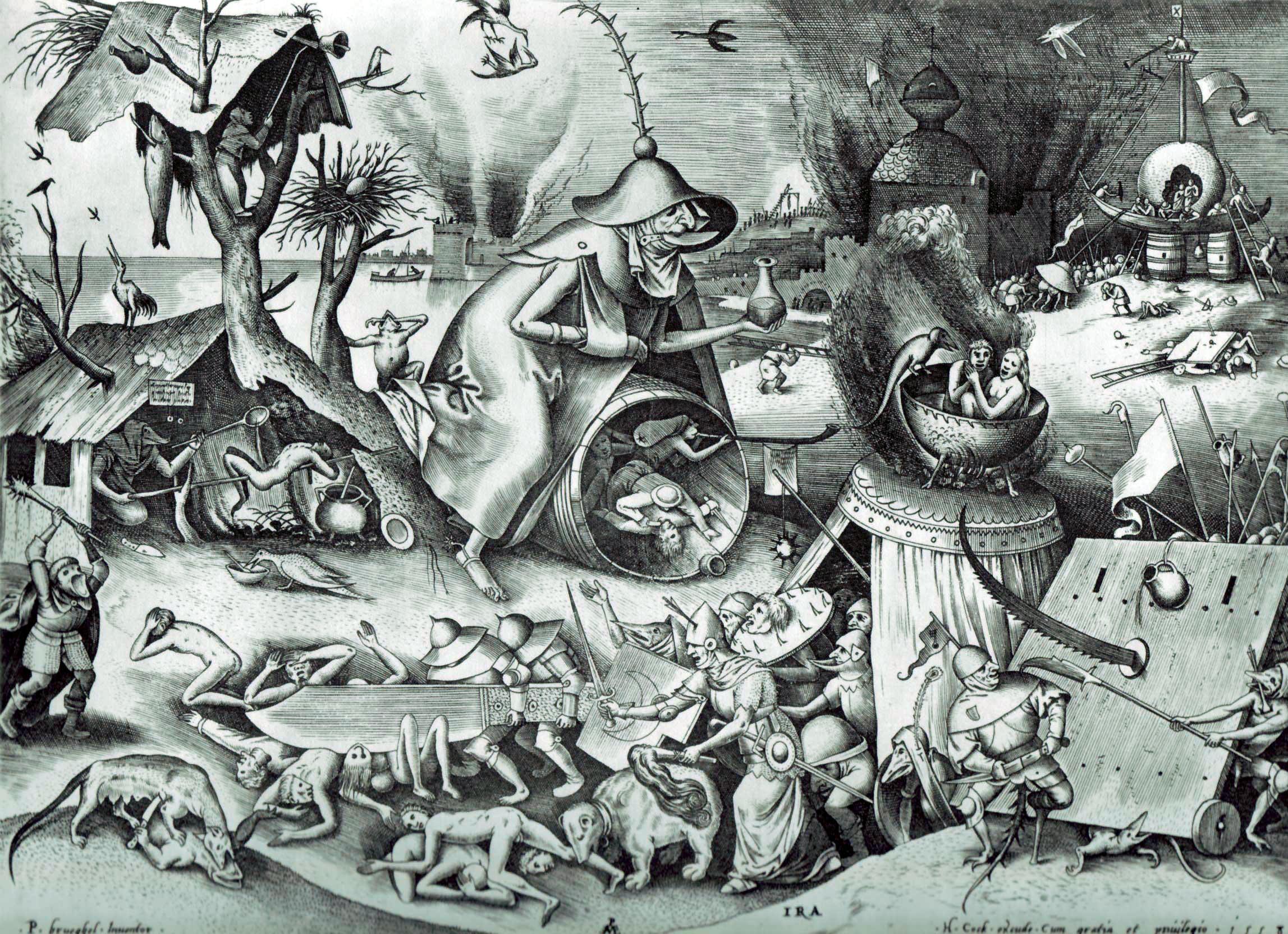
| The Perfect Illustration, found Here. |
A Magic-User may create a Shrine devoted to the evocation of unearthly beings, and use it as an aid for their spell-casting. Shrines are objects created from pure intention and willed specificity, and are empowered only through the singularity of their purpose and consistency in their use.
A Shrine is like a Thaumaturgical Circle or Sacrifice, it provides bonuses for a Magic-User when casting the spell Summon. What is different about them is that they continue to exist after use, and can be used more than once, but must also be “charged”.
A Shrine is like a Thaumaturgical Circle or Sacrifice, it provides bonuses for a Magic-User when casting the spell Summon. What is different about them is that they continue to exist after use, and can be used more than once, but must also be “charged”.
A Shrine can be “charged” with up to one Hit Die of bonuses provided by a Sacrifice for each Level the Shrine has. This Hit Die bonus may later be expended by the Magic-User while casting Summon as if the Sacrifice were being performed at that moment, so long as they are within a reasonable distance of it, close enough for it to “hear” their incantations. (Remember that a 1 hit die sacrifice is a bonus of +1 for Animals, and +2 for those of the same species as the Magic-User)
The forms a Shrine might take take are both numerous and limited: It could be a vessel or a statue, or a bas-relief, or a pedestal. It could even be a painting, or a decorative fountain, or even an ornamental mirror. Some even resemble holy reliquaries, or are simulacra of ancient artifacts, but these betray their falsity on any close inspection.
What is crucial and immutable is that a Shrine must be a fundamentally useless object, one that has only aesthetic qualities as opposed to functional ones. If a Shrine ever serves any purpose besides being an aid for evocation it ceases to function as a Shrine forever.
The Magic-User must describe the basic form of the Shrine. A few sentences are fine, but they really ought to have fun with it, and it should not be a typical example of whatever kind of thing it is.
The Magic-User must describe the basic form of the Shrine. A few sentences are fine, but they really ought to have fun with it, and it should not be a typical example of whatever kind of thing it is.
If a Shrine is ever deliberately used for any purpose by the Magic-User, or the Magic-User witnesses, allows, or benefits from its use for any other purpose it will no longer function as a Shrine. This cannot be undone; they’ll have to get a new one. It is at the Referee's discretion if or when this occurs, but basically being used as anything beyond “decorative fountain or bowl” or “weird mirror” is too much.
A Shrine cannot be functional furniture, even a stepping-stool. However, a thing like a stepping stool that is covered in small upward pointing knives would be perfectly fine, as that would make it impossible for use as a stepping-stool, and thus clearly dedicated to something else. Much like this is.
If a Shrine imitates a religious icon or an archaeological item of some kind it does not hold up to scrutiny, at best it only seems like a familiar sort of cross/urn/icon during a hurried first glance.
Shrines vary in their degree of potency as magical tools, and also in their wondrousness and intricacy as physical objects, but these two things are invariably correlated: A potent Shrine always costs a fortune to create, and even the most simple of Shrines are still precious, costly objects.
The power of a Shrine is measured in Levels. A Shrine must have at least one Level, and may also have as many Levels as the Referee permits, and the Adventurers supplies of money and artisans can allow.
To create a Shrine at least one artisan must be found to perform the skilled labor made necessary by the will of the Magic-User. Ideally this artisan would be of great talent and great ignorance, one who will not become aware of the meaning of their work, or prone to superstition. Even better still is if they are a known and trusted associate of the Magic-User, or someone who is given patronage by them.
The Magic-User must hire an artisan to create their Shrine, as the devoted study required to become a Magic-User precludes the learning and mastery of any lesser arts and crafts. As there are no Player skills relevant to this task (no, not even Tinker) this work may not be done by another Adventurer.
Less than ideal craftspeople might require bribes or threats to prevent gossiping once the work is finished, if they are even willing to do the work in the first place. The worst sort will politely decline, or even worse still accept the commission, only to report the Magic-User to religious or secular authorities immediately afterwards.
This process should be handled exactly like hiring a retainer, in particular a Craftsman. Materials might be included in the cost of labor, at the Referee's’ discretion.
This process should be handled exactly like hiring a retainer, in particular a Craftsman. Materials might be included in the cost of labor, at the Referee's’ discretion.
It will take the Craftsperson 1d4+3 days to complete their work on the Shrine. Roll twice for their estimate, but use the higher roll. This is what is used to determine the base cost, which must also often be paid up front, and in full.
Roll twice to see how long it actually takes them to make it, again using the higher roll. In addition, if a 4 is rolled roll that die again, and add that second number to the first total. Continue as long as fours are rolled, describing the sources of delay and setback.
A Morale roll is made for the Craftsman at the beginning of the labor, upon the occasion of any delays, and again once it is completed. If any of these are failed there is some sort of complication, such as a crisis of suspicion on the Craftsman's part, or a possibly disastrous spread of rumors about the Magic-User. If the Craftsman initially does accept the work there’s not much chance for repercussions, unless the Magic-User was interacting with a most suspicious and hostile kind of person in a very cautious and frightened kind of land.
If averse to using a morale system the Referee should at least roll in secret to determine if the commissioned artisan does something the Magic-User would very much not prefer, a 1-in-6 chance on 1d6 is recommended.
A Level 1 Shrine requires only one Craftsman to create it, but each Level beyond that must be added by another, different Craftsman.
A Level 1 Shrine requires only one Craftsman to create it, but each Level beyond that must be added by another, different Craftsman.
There are many varieties of Craftsmen, and creativity is encouraged in their selection. One might commission a Glassblower, Bonecarver, Alabasterer, Stone Carver, Painter or Miniaturist, Blacksmith (or Goldsmith, or Silversmith), Woodcarver, Cabinet-Maker, Arkwright, Brazier, Bellfounder, Gemcutter, Potter, Glazier, Ivorist, Joiner or Carpenter, Tapicer, or Wiredrawer when making a Shrine. These are not all that might be found, but not all of these are available for hire everywhere, or even in most places besides the largest of cities.
Each Craftsman adds their unique talents to a Shrine: the Arkwright creates a fine oak chest that is also a perfect cube and not hollowed on the inside, then the Miniaturist covers it in tiny painted devils and two-legged fish using only the color blue, while the Brazier casts four brass clawed feet for it to stand on.
A Shrine may be improved upon once it is created, as long as it has been used for no other purpose. A Magic-User may hire a new Craftsman whenever funds are available to add additional Levels to it.
While all Shrines might resemble works of art, not all works of art can be considered as a Shrine. Nor can a Magic-User simply use a found art object as a Shrine, nor can they repurpose icons and relics of the religious faiths as Shrines for their own purposes, except for use as raw materials.
The existence of Shrines as described here does not imply that all art objects in the fictional world of play are used as Shrines, nor does it imply that anything a Summoned creature appears from must necessarily be some kind of art object.
Things that weren’t made as Shrines through the will of a Magic-User can never be Shrines and never were one before (unless they were fully destroyed and then reformed into one). Assemblage sculpture does not count, it must be on the magnitude of, as an example, melting down a golden altarpiece stolen from a church and then having it recast in a new mold.
“Ruined” Shrines, one that no longer function due to being used as something else can be discovered, and a Magic-User could even steal an unruined Shrine and make it their own, although they would have to provide new sacrifices for it.
While those who are trained in the use of Magic will be able to see a Shrine for what it truly is with very little effort even those wholly ignorant of the Art will likely see them as possibly malign objects of a most curious nature.
Shrines always detect as magic, if you are using a spell system with Detect & Read Magic. If you are using Clerics, or a Good/Evil Law/Chaos alignment system a Shrine will always detect as Chaotic and Evil as well. Any Magic-User should be able to discern that a Shrine is in fact a Shrine after a brief period of examination, and usually are quite obvious to them.
Shrines always detect as magic, if you are using a spell system with Detect & Read Magic. If you are using Clerics, or a Good/Evil Law/Chaos alignment system a Shrine will always detect as Chaotic and Evil as well. Any Magic-User should be able to discern that a Shrine is in fact a Shrine after a brief period of examination, and usually are quite obvious to them.
For almost everyone in the world art collection is an alien and unknowable hobby, and this is especially the case in any Early Modern setting. “Don’t worry about that, it’s just some art/a carved stone pillar with a laughing skull on it/an oil painting of a goat surrounded by flames and flowers in a hand carved frame/a polished black stone urn with phrases in medieval latin phrases drawn on it in gold leaf” is not a persuasive explanation when being questioned by a possibly hostile person.
Shrines are obviously a strange thing to have around, so owning one is at best seen as extremely eccentric. It's easier if you're rich, because then you could at least surround your Shrine with more mundane strange things and disguise it through context. Although it’s obviously bad to be caught hiding a Shrine it’s still something an Adventurer should probably keep hidden.
Shrines are obviously a strange thing to have around, so owning one is at best seen as extremely eccentric. It's easier if you're rich, because then you could at least surround your Shrine with more mundane strange things and disguise it through context. Although it’s obviously bad to be caught hiding a Shrine it’s still something an Adventurer should probably keep hidden.
While a Shrine is not a necessarily fixed and immobile object it is not a simple task to move one from place to place.
Each Level of a Shrine adds one level of Encumbrance to those carrying it. (Count it as 5 individual items if its loaded onto a pack animal)
Any Shrine above two Levels is remarkably difficult, if not impossible, for any single Adventurer to move without assistance. Try moving a 4’x6’ painting of the hell-dimensions, or even a small hermetic glass coffin through a dungeon by yourself.
A Shrine must fully receive any sacrifice to be infused with its occult energies, and makes it's true nature clear when put to use for its intended purpose.
In addition to all the normal restrictions on what can be counted as a Sacrifice, for a Shrine to store the sacrifice must performed on, at, or into the Shrine in some indisputable and deliberate way. Any damage this would otherwise cause to the Shrine is restored during the process, with stains fading away and all foul liquids are mysteriously absorbed. Likewise there is always some sort of unnatural display once the Summoning is performed and the stored bonuses expended, like all those stains and foul liquids seeping back out.
On Ritual Garb
A Magic-User may also create clothing that is more conducive to the calling of outside forces to our world, which is to be worn when performing a Summoning. These things are created using methods similar to those used for creating a Shrine.
This is what Ritual Garb looks like.
It’s like a Shrine that you wear, and the Magic-User must provide a description or visual aid of some kind. It is clothing that must exist only for use in Summoning. It must not resemble sane or normal fashion in any way, and also must have no value as armor or as protection from the elements. Ritual Garb has even less plausible deniability during manufacture than Shrines, not to mention while being worn. It must be worn while performing a sacrifice to "charge" it. In addition, a "charge" will go to Ritual Garb before it goes to an uncharged Shrine, if both are present.
Each Level of the Ritual Garb still adds one level of Encumbrance to the wearer due to it's awkwardness, bulkiness, limited ranges of movement, and so on (even if the Ritual Garb involves significant partial nudity). If a Magic-User casts any other spells while wearing Ritual Garb it is ruined.
When seeking out a craftsperson there are curriers, embroiderers, button makers, canvassers, shoemakers, dyers, feltmakers, hatters, tailors, lacemakers, milliners, weavers, drapers, and wig-makers in addition the those mentioned previously. Remember, each Level requires an additional Craftspersons contribution, you can’t just get the same jacket fitted again and again. You get the idea.
An Adventurer could certainly make use of a great Shrine while wearing elaborate Ritual Garb inside of a Thaumaturgical Circle while performing further Sacrifices for vast and hilarious bonuses, but if the Adventurers really had that kind of budget to spend on casting Summon, and actually pulled off all the logistics to set up that situation up they've truly earned it.
Wednesday, April 6, 2016
Medicine without the Church
Someone always wants to play a Cleric simply because they have healing spells, but no one should be forced into the clergy because of medical necessity. Here are 4 flavorful variations on the basic “healing spell” for Magic-Users instead.
This spell is almost exactly like Cure Light Wounds (pg. 98, Rules and Magic) except:
Roll 1d4
- The Magic-User applies an herbal poultice created during the memorization process, using local plants gathered through intuition, to the wounds of the wounded, sealing up cuts and fading contusions. The character must wear the poultice for the next 24 hours, or the wounds will suddenly reappear when they remove it.
The character exudes a powerful musk that animals find distasteful this whole time: dogs will bark at them, horses will whinny, and so on. The increased noise caused by fleeing birds and other creatures will make encounters in the wilderness much more likely, and the use of domestic animals will become much more difficult. (Roll for Reactions involving natural animals using only 1d6, automatically roll for a “Wilderness” encounter if applicable) - The Magic-User must prepare an astrological chart, under the open night sky, so as to better align the astral influences of the moons and planets in the favor of a subject, and also perform a particular incantation dependent upon the movements of the heavens at the time of casting. The spell can only be prepared or cast outdoors, at night, with the stars fully visible.
- The Magic-User prepares a quaff of potion similar to “Dwale”, a hemlock-based and opioid based anesthetic, from local materials. After this vile, bitter liquid is drunk the spell takes effect, but the person who drunk it must Save vs. Poison immediately. If successful they fall unconscious for 1d6 rounds. If unsuccessful they must Save vs. Poison once again, if this roll is successful they fall unconscious for 1d6 turns. If that roll is also failed they must Save vs. Poison one final time or simply die, as their lungs fail to draw breath.
- The Magic-User must have a ritual item available to cast this spell, one similar to what caused the initial wounds. A dull blade for cuts, a hammer for blunt traumas, and so on. This weapon is placed in, on, and near the wounds to be healed, causing them to be suddenly and miraculously cauterized by a searing, painless heat that nonetheless leaves distressing scars.
These ritual items may be re-used, but they may be touched only by the magic user and the intended target of the spell, lest they lose their enchantment. They are “charged” during memorization, and each type of wound also requires a different memorization.
(For healing temporary negative conditions a symbol of the Caduceus may be used.)
Tuesday, November 10, 2015
To Swing Back The Pendulum
To Swing Back The Pendulum
Magic-User Level 1
Duration: Permanent
Range: 0

From the perspective of the magic user this spell causes her to return to a prior moment she has just experienced, allowing her to witness a different outcome to a turbulent event which resolved in a way she found unsatisfying. Perhaps due to an influence radiated by her enlightened consciousness the course of probability itself is seemingly altered, and an alternative outcome occurs.
This spell allows the Magic-User to "redo" an event in the immediate past, erasing anything else that has happened since. The chosen die roll is performed again, and new results are determined. This spell may be used on any die rolled by any player or the Referee.
This spell may only be used to "redo" events that involved a die roll, such as saves, rolls to hit, and the products of randomized tables. The Magic-User may never use this spell to give themselves or another player a "redo" of a decision that they willfully made, only the randomized outcomes or arbitration of the consequences of that event can be tampered with.
To cast this spell the Magic-User must first nominate a particular die roll as the intended target of this spell the moment after the die roll is performed, that is, during a round before the spell is actually cast. This represents the intense meditative focus state a Magic-User must place themselves in to execute the maneuvers necessary for this spell to succeed, it also alerts the Referee and the other players to the possibility of many things soon needing to be "undone" if the spell is successful.
For each level of experience they posess the Magic-User has one round after the rolling of the chosen die to successfully cast the spell, and thus "undo" a greater number of things. The exact effects of the spell are determined by the procedures detailed below.
~
As mentioned above, from the perspective of the Magic-User this spell appears to cause them to leap backwards in time to a prior moment to see it happen differently. This is not the case. This spell instead simply moves the Magic-User into a duplication of reality, a nearly perfect copy of all existing instances of everything, at the moment just before the event described by the chosen die roll occurs. Infinitesimal imperfections in the replicated chain of causality that determine the outcome of events in the duplicate universe are what allow the alternative outcome to occur.
After the spell is cast, but before the chosen die is rolled again, it must first be determined which reality will be the subject of further game play, as there are now two competing instances: there is the duplicate reality the Magic-User has been transported to, and the original one that they have been removed from that contains the remaining party.
To determine which reality will be used the Magic-User first rolls a saving throw vs. Magic for each experience level she has, noting the total number of successful saving throws.
Then, every other member of the party rolls a saving throw vs. Magic (if additional Magic-Users, or Clerics, are present they must roll an additional saving throw vs. Magic for each level of experience they posses as well). The total number of successful saving throws is noted, and compared to the total rolled by the Magic-User.
If the total rolled by the party is less than the number of successful saving throws made by the Magic-User the narrative of game play is now focused on the duplicate reality where the Magic-User has taken the place of an exact duplicate of herself. She now witnesses the alternative outcome of the event granted to her by the spell. The chosen die is now rolled again (for the first time, strictly speaking) and the the game play narrative continues from this point. The Magic-User has no internal awareness of the truth of her metaphysical condition, or that of the duplicate party.
All players, except for the original Magic-User, now play as duplicates of their original characters in duplicate reality. Possessing copied memories existing only from the beginning of their original existence until the moment before the casting of this spell was complete, they have no internal awareness of the truth of their metaphysical condition, or that of the Magic-User.
If the Magic-User rolls the lower number of saves they must roll one final save vs. Magic. If this is unsuccessful they are perceived by the remaining party as suddenly vanishing from reality; they have merged with their duplicate reality self, instead of merely switching places with them. Play then continues with the narrative focusing on this reality. The die is not re-rolled, nothing is "undone", and the Magic-User no longer exists.
If this save is successful they have instead been instantaneously replaced by a duplication of themselves, but because the narration of play remains focused on this original reality the spell has effectively been a failure: the die is not rolled again, and nothing is "undone".
The duplicate of the Magic-User which has been placed into original reality with the remaining characters will have the memory of intending to cast this spell to view a different outcome of an event occurring before them, but is now perceiving that it has had no effect whatsoever.
The logical and reasonable conclusion is that this event was in fact an ironclad certainty from the first moments of the birth of the universe: probability was not a real factor in its occurrence, only prophecy. The memorized instance of this spell has also been expended, as successfully casting it to no effect is what has transported the duplicate into this reality. In all other respects the duplicate Magic-User is the same as the original, and the player formerly controlling the Magic-User has immediate control of them.
If a duplicated Magic-User casts this spell they are made nonexistent the instant casting is complete, and the necessary saves vs. Magic are instead rolled by the original Magic-User, who is identical to the duplicate. The original party also rolls saves vs. Magic as above.
If the original Magic-User has more successful rolls than the party it indicates that the narrative of play will now shift to the duplicate reality containing the original Magic-User, where the chosen event is now occurring and the affected die is then re-rolled.
Play continues as normal from this point with the remaining party taking control of their duplicates and having no internal awareness of the truth of their metaphysical condition, but the Magic-User becomes fully aware of the true nature of this spell and of her metaphysical condition in a sudden moment of esoteric clarity and insight.
If the remaining original party is more successful with their saving throws vs. Magic the original Magic-User is returned to her original reality from the duplicate reality in the instant that the duplicate Magic-User ceases to exist. The narrative of play will now focus on the original reality.
The Magic-User has a memory of intending to cast this spell to view a different outcome of an event that occurred before them, but now are perceiving that it has had no effect whatsoever.
The logical and reasonable conclusion is that this event was in fact an ironclad certainty from the first moment of the birth of the universe: probability was not a real factor, only prophecy.
In all other respects the Magic-User is the same as the duplicate, and the player formerly controlling the duplicate Magic-User takes immediate control of the original Magic-User. Their memorized instance of this spell has been expended, however, as successfully casting it is what initially transported them into this reality.
The Magic-User has no inner awareness of the truth of her metaphysical condition or the true nature of this spell.
If cast again by the Magic-User this spell behaves in the usual manner.
If a Magic-User casts this spell while in a duplicate reality that reality is made nonexistent the instant the spell is complete. Any saves vs. Magic which would have been rolled by the duplicates are instead rolled by the original party, who are identical to the duplicates.
If the Magic-User is more successful with her saves vs. Magic than the original party she is transported back to her original reality, and the duplicate Magic-User is transported back to the now nonexistent duplicate reality, ceasing to exist. The narrative of game play will now focus on the original reality.
The Magic-User has a memory of intending to cast this spell to view a different outcome of an event the occurred before her, and is now perceiving that it has had no effect whatsoever. She then becomes fully aware of the true nature of this spell and of her metaphysical condition, as well as the duplicates, in a sudden moment of esoteric clarity and insight.
If cast again by the Magic-User this spell behaves in the usual manner.
If she is less successful than the original party at her saves vs. Magic, the original party is then transported to the nonexistent duplicate reality along with the duplicate Magic-User, who merges with the Magic-User, remaining with the original party in the nonexistent duplicate reality, all ceasing to exist.
The duplicates replace the original party in the original reality, the dice are not rolled again, and the narrative of play now focuses on the original reality now containing the duplicates of the original party.
The duplicates will be exact copies of the remaining party, who were exact copies of the duplicates. The original party becomes fully aware of the truth of their metaphysical condition, and the true nature of this spell, in a sudden moment of esoteric clarity and insight.

Note: in any situation, even if the exact same result as before is rolled it is still considered to be a "new result" in the terms of this spell, firstly because this is the first instance of this roll in the duplicate reality, and secondly because the die has physically followed a different path than the one it did before, despite ultimately arriving at the same number.
Subscribe to:
Posts (Atom)